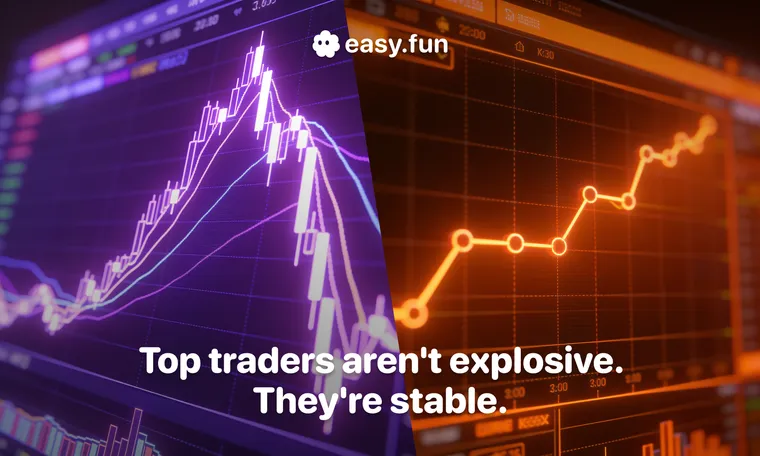
Every cycle produces heroes.
Screenshots circulate. Threads go viral. PnL numbers float around like trophies. And for a moment, it looks simple. Enter early. Exit clean. Repeat.
But anyone who has traded long enough knows the truth: performance that survives volatility looks very different from performance that survives Twitter.
The best traders don't just win. They endure. They manage risk without drama. They adapt without panic. They make decisions in public markets that move against them—and still come back the next session intact.
In an arena, this difference becomes obvious. Under shared visibility and real-time pressure, habits are exposed. Discipline compounds. Recklessness collapses. When trading moves from isolated screens to a competitive environment, the separation between amateurs and professionals becomes structural, not cosmetic.
So what actually defines a top arena trader?
Why Most Traders Plateau: The Illusion of Skill in Isolated Trading
In traditional trading environments, it's surprisingly easy to believe you're improving when you're not.
Without shared benchmarks or structured comparison, performance is often judged in isolation. A profitable week feels like validation. A losing streak feels like bad luck. There's no stable reference point for behavior quality—only outcomes.
This creates a dangerous feedback loop:
- Traders overemphasize short-term wins
- Losses trigger emotional overcorrection
- Risk discipline erodes quietly
- Strategy shifts too often
In social trading ecosystems, the distortion intensifies. Influence becomes conflated with competence. Visibility replaces verification. Audiences reward boldness, not consistency.
Without an arena, trading stays personal and private. Mistakes are rationalized. Discipline is optional. Growth slows.
The result? Most traders don't fail dramatically. They stagnate. They hover at the edge of competence without ever building a repeatable structure.
Skill requires pressure, feedback, and context.
Most trading platforms provide execution—but not the environment necessary for refinement.
Arena Trading Reveals Real Skill
Skill Emerges Under Shared Conditions
We believe skill becomes visible when the environment demands it.
In an arena-style framework, traders operate under the same market conditions, the same volatility spikes, the same liquidity shifts. Decisions aren't evaluated in hindsight—they're visible as they unfold.
This shifts the focus from narrative to behavior.
On easy.fun, the arena model surfaces patterns that matter:
- How consistently a trader sizes positions
- How they respond to drawdowns
- Whether exits follow structure or emotion
- How risk evolves across sessions
Under shared visibility, habits compound. The arena doesn't manufacture talent—it exposes it.
What Separates Pros from Amateurs
After watching thousands of sessions, certain differences become clear.
- Pros define risk before they define reward.
Amateurs chase upside. Pros control downside. - Pros operate within repeatable frameworks.
Amateurs adapt constantly. Pros adapt deliberately. - Pros measure behavior, not just outcomes.
They review execution quality, not just PnL. - Pros stay present.
They don't disappear during volatility. They learn through it.
In a competitive trading environment, these traits become structural advantages. The arena rewards consistency more than drama.
That's why we built easy.fun not just as a trading interface, but as a performance environment. A place where participation is visible, comparison is natural, and discipline becomes the default path.
How Top Arena Traders Operate
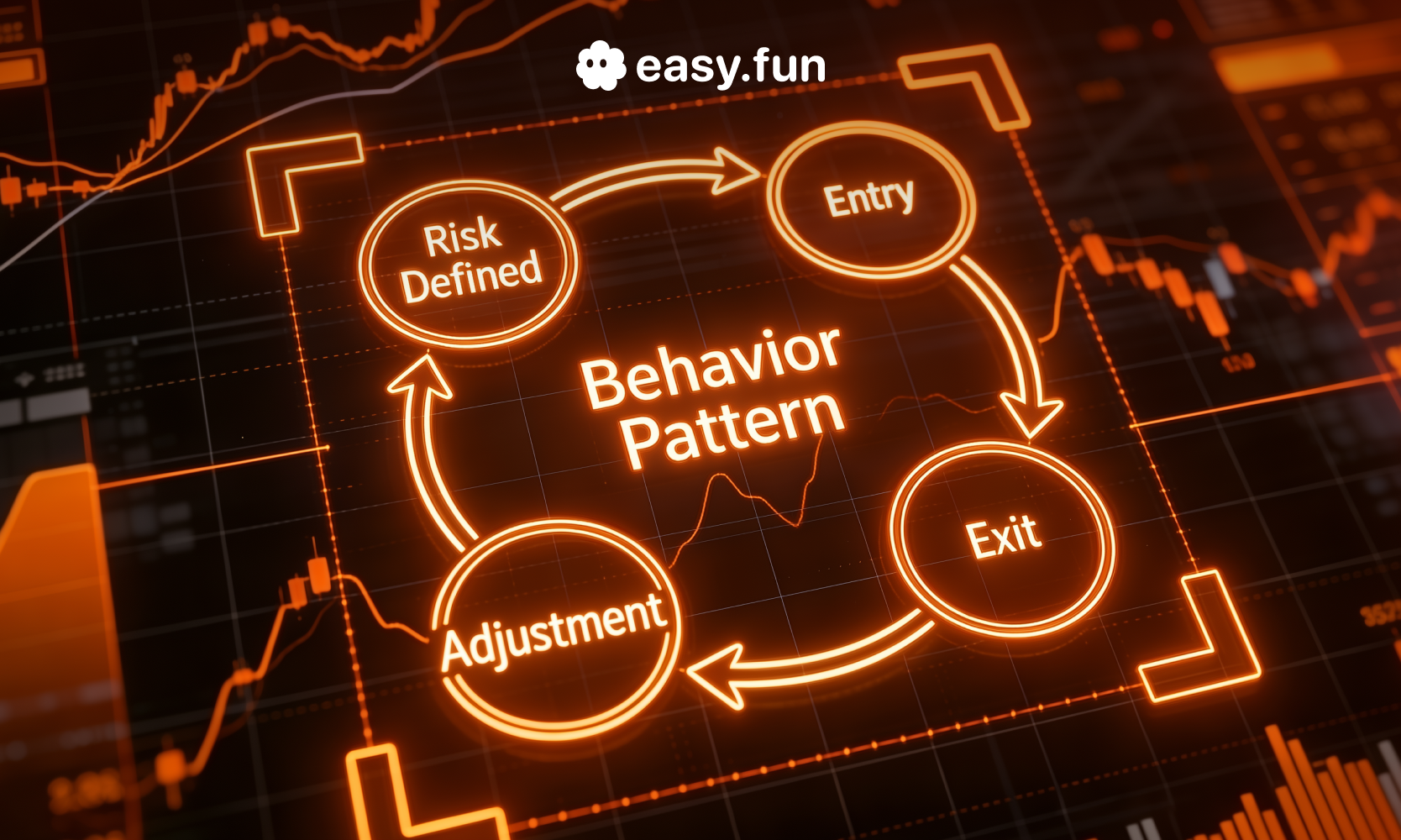
Risk Is Defined Before Entry
Top arena traders rarely enter trades impulsively. They define exposure limits and exit conditions before capital moves. In live markets, this prevents reactive behavior when volatility spikes.
On easy.fun, this discipline is reinforced through visible allocation logic and structured exposure. Traders who consistently manage position sizing build smoother performance curves. Over time, the difference is obvious.
Case:
2 traders enter the same breakout. One sizes aggressively, doubling exposure mid-move. The other sticks to predefined allocation limits. When the breakout retraces, the second trader remains intact—mentally and financially.
The arena makes that contrast impossible to ignore.
Session-Based Thinking
Top traders treat markets as sessions, not endless streams. They evaluate performance in structured windows. This prevents emotional carryover between trades.
In a shared environment, session-based behavior becomes measurable. Traders who reset effectively avoid cascading mistakes.
The difference isn't intelligence. It's containment.
Adaptive, Not Reactive
Markets change. Volatility compresses, expands, rotates. Top arena traders adapt parameters, not identity.
They don't abandon frameworks after a loss. They refine them.
Shared metrics allow others to observe this process. Over time, disciplined adaptation stands out far more than high-variance bursts.
Emotional Neutrality in Public
Perhaps the most overlooked skill: emotional stability when performance is visible.
Arena trading removes the comfort of isolation. Every decision exists within a shared context. This can amplify pressure—but it also trains composure.
Traders who remain measured under visibility develop a competitive edge that extends beyond strategy.
Long-Term Equity Shape Over Short-Term Wins
Amateurs focus on single trades. Pros focus on equity trajectory.
When performance data is visible session after session, smooth consistency often outperforms sporadic spikes. Arena-style trading rewards sustainability.
As structured competitive layers begin to integrate more explicitly into the ecosystem, these characteristics will become even more pronounced. Skill will no longer hide behind volatility.
From Participation to Mastery
We see easy.fun evolving into more than a place to trade.
The long-term direction is clear: structured competition, transparent metrics, and shared benchmarks that elevate standards across the ecosystem.
As more traders operate inside arena-style environments, culture shifts. Recklessness becomes less celebrated. Discipline becomes aspirational. Participation deepens because improvement is measurable.
Over time, new forms of competition will make this progression even clearer—without compromising the integrity of onchain transparency.
Top arena traders won't be defined by spectacle. They'll be defined by durability.
The arena doesn't just show who wins. It shows who improves.
And in Web3, where markets are open and global, that shift matters.
Skill isn't a label. It's a pattern.
If you want to see what separates disciplined traders from impulsive ones, step inside the arena.
The arena rewards those who stay.
Enter the arena!
- Explore easy.fun - Discover the platform and start refining your edge.
- Join our Discord - Learn alongside traders who value structure over hype.
- Follow us on X - Stay updated as competitive layers continue to evolve.